
Film: Botany Studio Visit with Fun Palace
There is a moment, somewhere between the pouring of the slip and the opening of the kiln, where a piece of Studio Enti porcelain becomes itself. It is not a moment you can plan for entirely. It is the result of process, of material, of many hands, and of something less tangible than any of those things. It is what makes working in ceramics both humbling and endlessly compelling.
In 2025 The team at Fun Palace spent some time inside Studio Enti’s Botany workshop, capturing one of their ‘casual observations of creative practice’.
What the resulting film reveals is a space where production and craft exist in genuine conversation with one another.
Finally sharing this here after over year and a huge move to our new studio space in Leichhardt. Honoured to have had the moment captured in such a considered way and our process laid bare.
Making in multiples, by hand
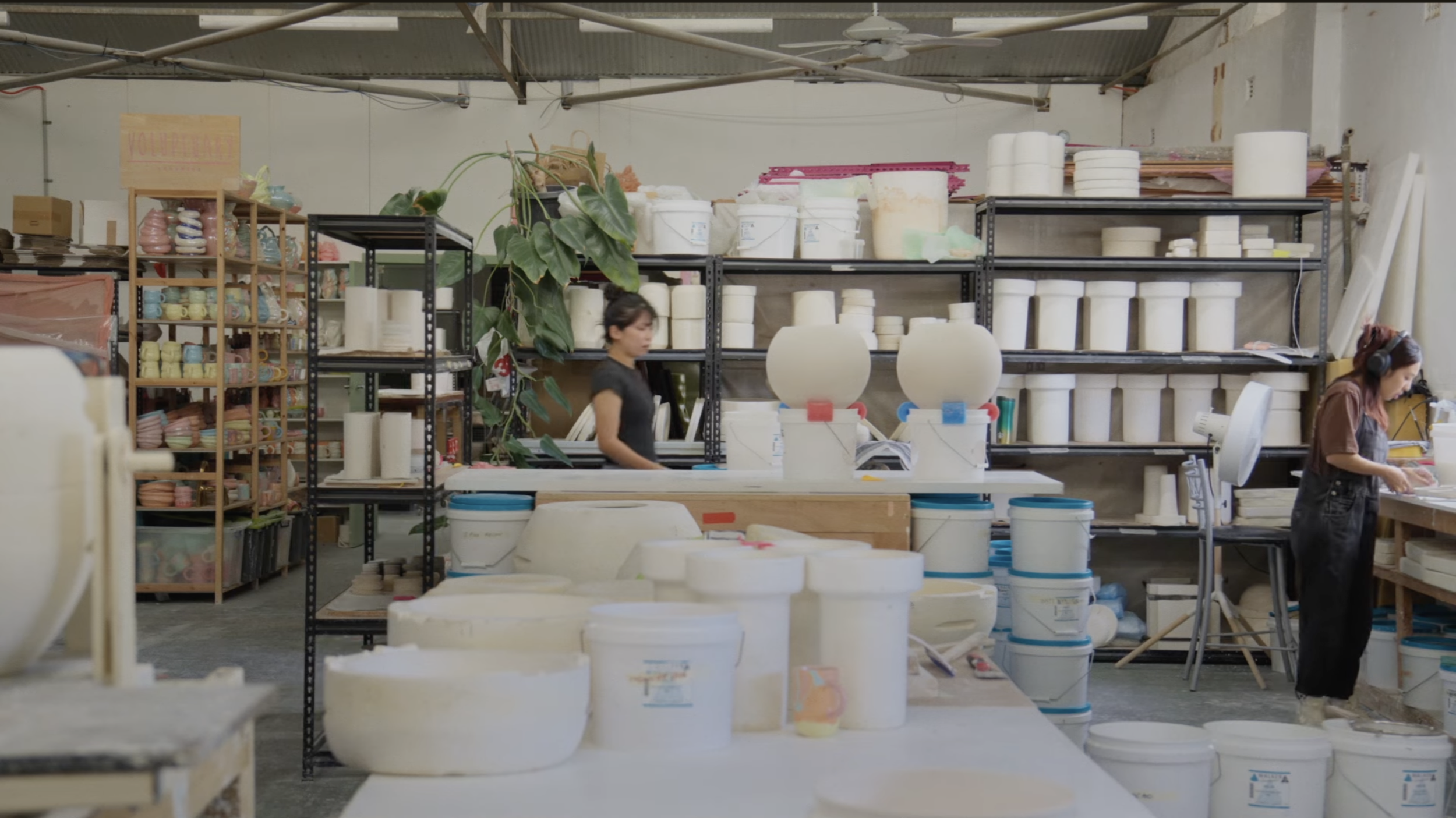
Slip casting sits at the heart of the Studio Enti process. It is a technique that allows for a degree of consistency across a collection, but as Naomi is quick to point out, there is nothing industrial about the way it is used here. The finish remains deeply handmade, touched and shaped by the people working with it at every stage. The studio is set up to reflect that flow, from the kilns at the back of the space through to the front, where orders are curated, translucencies checked, and pieces packed and dispatched.
Ninety percent of what leaves the studio is made to order. The work is deliberate and considered at every step.
Forms that travel
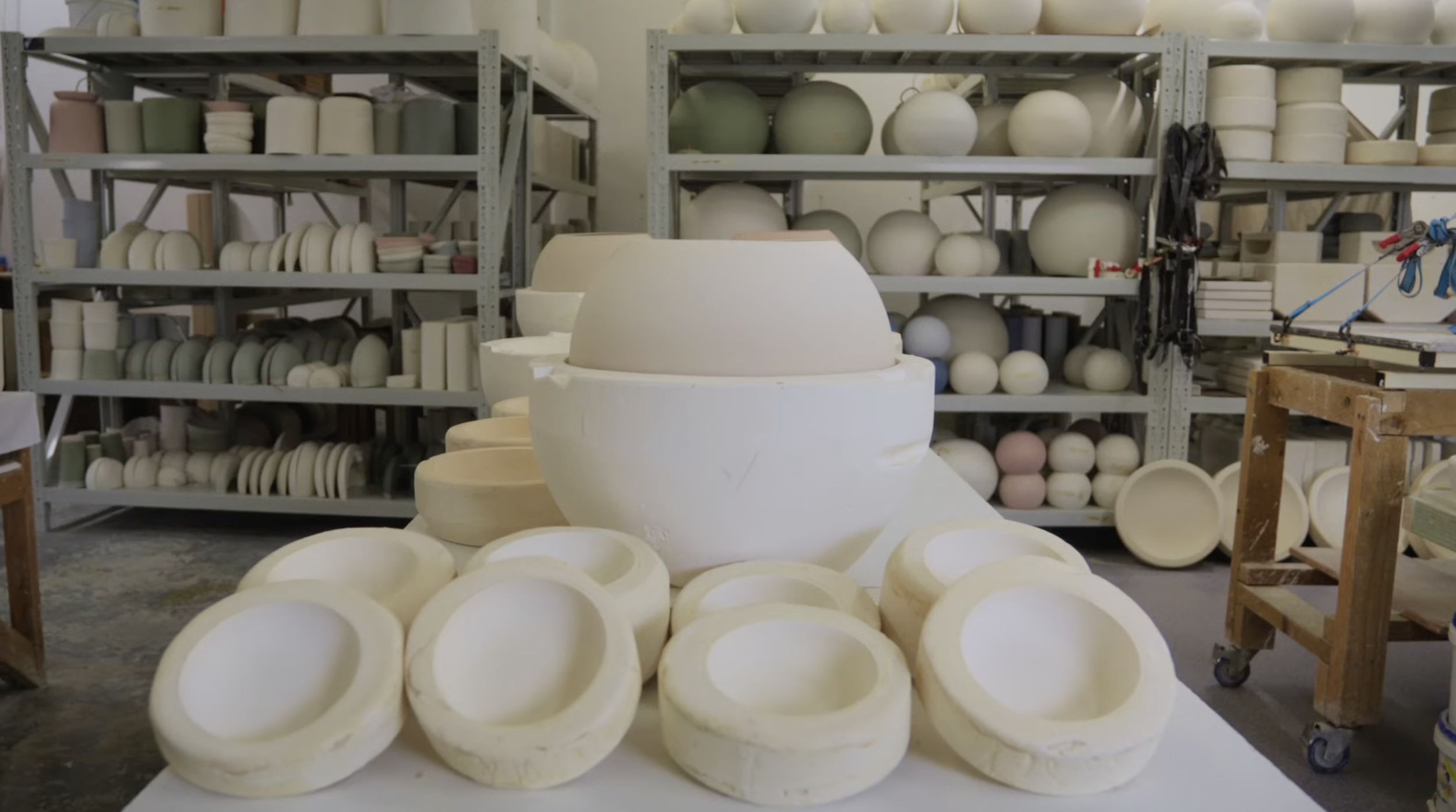
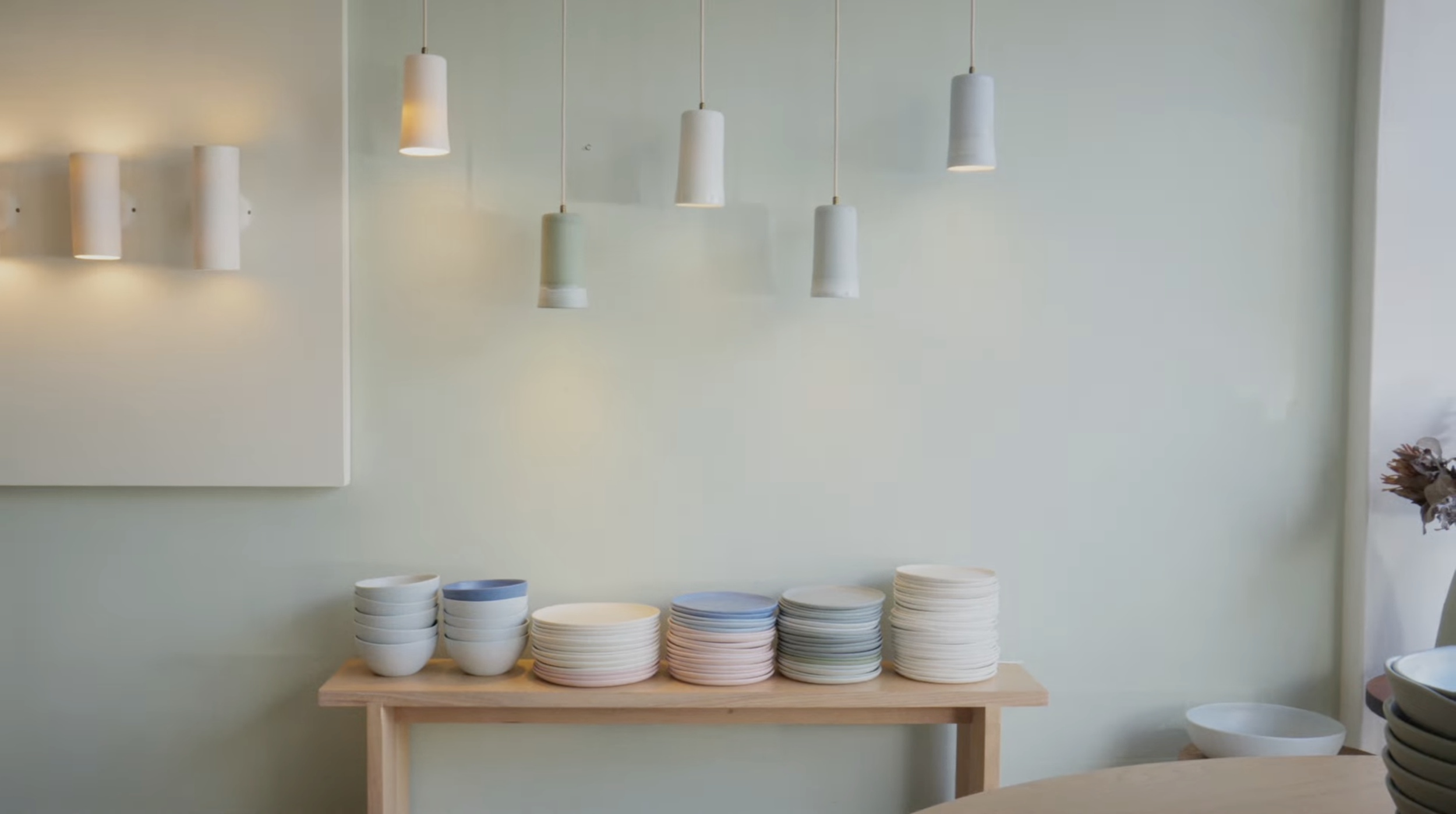
One of the quieter revelations of the film is the relationship between Studio Enti's tableware and its lighting. Many of the lighting forms began life as tableware moulds, classic shapes that Naomi has translated into a new context and a new utility. It is a process she describes with characteristic thoughtfulness: taking something known and giving it a different kind of purpose. The forms themselves are not invented from nothing. What is invented is the way they are asked to behave in a new environment.
The Orb pendants are a different story. Made uniquely as lighting pieces, they required their own process of discovery, yoga balls and plaster experiments included. At their largest, each mould holds up to 80 litres of slip. What began as a three-person operation to tip the mould has since evolved, a small tap at the base now letting the clay out with considerably less effort and considerably less strain on everyone involved. Practices and techniques evolve, the work evolves. The pieces evolve with it.
The beauty of limits
What comes through most clearly in the film is Naomi's relationship with the material itself. Porcelain has a tactility that draws you in, a buttery quality that invites touch and creates warmth almost without trying. But it also has limits, and working within those limits is as much a part of the practice as pushing against them. The handmade environment demands a particular kind of honesty. You cannot machine your way out of what the clay will and will not do.
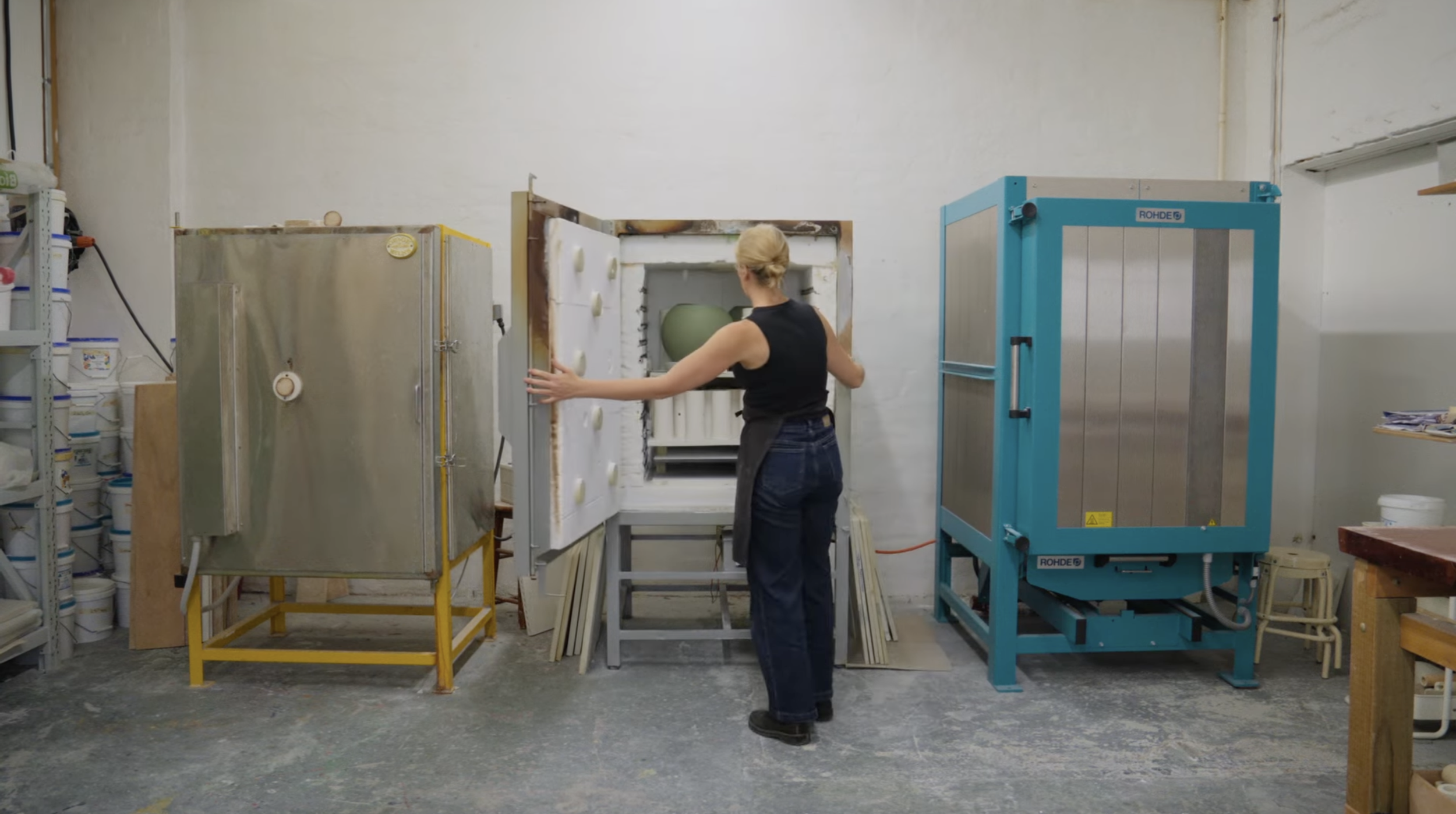
Many hands touch each piece across its journey through the studio. There is room for error in that process, and the team works carefully to minimise it. But there is also, as Naomi puts it, a force greater than any of them at work, particularly in the kiln. Learning to give in to that, to hold the process with care while accepting that the outcome will always carry something of its own, is perhaps the most enduring lesson ceramics has to offer.
The film is a generous and unhurried look at a practice built on exactly that.
Watch the full video via Fun Palace on YouTube.